
A toothache can be easy to ignore when it is mild or comes and goes. It can be taken for granted that it is probably caused by sensitivity or due to a small cavity and expect it to improve. But if you have pain or changes in your tooth that won’t go away, it may indicate a deeper issue. A root canal may be recommended when the soft tissue within the tooth, known as the pulp, becomes infected or is very inflamed. The treatment through a root canal eliminates the infected tissue, cleanses the inner part of the tooth and aids in maintaining the natural tooth. It’s important to identify the signs so you can determine when something is wrong with your teeth and needs to be fixed.
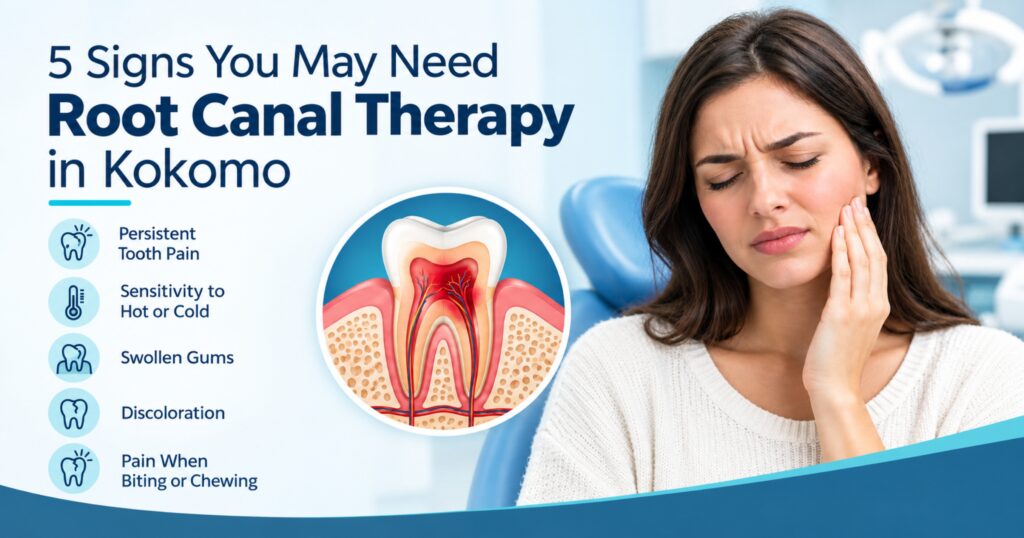
1. Persistent Tooth Pain
Pain that persists is one of the most common indications of dental issues.There can be a dull ache, a sharp pain, a throbbing sensation or a discomfort that increases when lying. This pain can also be intermittent, which can lead one to delay dental care.There are several reasons for tooth pain, such as cavities, cracks, gum issues and infection. Root canal treatment in Kokomo might be recommended if the pulp within the tooth is infected or very inflamed. It’s not necessary to find out the cause of the problem yourself, but it is important to get the tooth checked to determine the cause and treatment.
2. When Hot or Cold Causes Lasting Tooth Pain
Hot or cold sensitivity to food or drink may occur for various reasons. Sensitivity may be temporary, such as due to worn enamel or gum recession. If one tooth is sensitive to both hot and cold temperatures and the pain persists after eating or drinking, it might indicate that there is an irritation and/or damage to the pulp. You may experience pain after consuming coffee, ice cream or other hot or cold food. See the dentist if the sensitivity is a recurrent occurrence or persists for a longer time.Your dentist can see if this is due to a cavity, damaged tooth or if there is any other condition which might require a root canal.
3. Pain When Biting or Chewing
It is better to pay attention to the symptom if one tooth hurts when you bite down. When eating, pain can result from a deep cavity, a cracked tooth, broken filling, infection or inflammation around the tooth. There might be a sharp sensation at the time of pressure or a dull pain after, this is not always the case. In some cases, the problem can’t just be detected by a visual inspection of the tooth. Your dentist may conduct an examination and take X-rays to learn more about what’s going on underneath the surface. In case the pulp has been infected or is very inflamed, root canal treatment could be one of the treatment alternatives.
4. Swelling or Tenderness Near a Tooth
If there is swelling around a tooth, that is also an indicator that something is wrong. The gum could be red or puffy, and look tender, and it might have a slight bump close to the impacted tooth. It may also be painful when you touch it. These may sometimes be related to an infection. When bacteria have invaded the pulp, the infection can spread to the tissues around the tooth. Swelling alone doesn’t necessarily mean that a root canal is needed, but if there is pain or sensitivity with the swollen gum, it should be seen by a dentist.
5. A Tooth Becomes Darker or Discolored
Sometimes, when you notice a change in the color of your tooth, it might mean that there is internal damage. Darkening of a tooth can occur following an injury or trauma, regardless of when the trauma happened, even months or years ago. It can also damage the pulp which will affect the tooth and may eventually lead to discoloration. A tooth can become discolored for a variety of reasons and if it is not the result of a root canal treatment, it doesn’t necessarily indicate the need for a root canal treatment. If the tooth is darkening in color and you are also having pain, sensitivity, or swelling, however, it is crucial to have the tooth evaluated. An examination can help determine the cause of the change and if treatment is needed.
When Does a Tooth Need Root Canal Therapy?
Root canal treatments are necessary when the pulp in the tooth is infected or very inflamed. This may occur due to:
- Deep tooth decay
- An untreated cavity
- A cracked or fractured tooth
- An injury or trauma
- Repeated dental procedures
- Damage to the inner part of the tooth
- An infection that has reached the pulp
Early treatment of dental problems can prevent them from developing into more serious problems. It is also important to get regular dental check-ups to notice if there are problems with the teeth before they become bad.
How Can Root Canal Therapy Help Preserve Your Tooth?
The most important purpose of root canal treatment is to preserve a natural tooth. The damaged or infected pulp is removed during the procedure and the remaining tooth structure is preserved. The inside surfaces of the cavity are cleaned, sealed and filled. Depending on the condition of the tooth, a filling or crown may be recommended after this. Your dentist will be able to tell you which of the treatments will protect the treated tooth. Maintaining the natural tooth will help keep the teeth normal in chewing function and make replacement of the tooth after extraction unnecessary.
Is Root Canal Therapy Painful?
A lot of people have problems with the fear of pain during root canal treatment. The procedure is carried out with the help of modern methods and local anesthesia to ensure patient comfort. Tenderness or some sensitivity may occur after treatment, but this is usually temporary. Your dentist will be able to give you detailed directions on how to take care of this treated tooth during the healing process. If you have concerns about treatment, talk with your dental team prior to treatment.
Root Canal or Extraction?
You might want to have the tooth pulled if it is highly sensitive or is infected. Root canal therapy may be an option to retain your natural tooth if it can still be restored. Infected pulp is removed, but not the whole tooth. Extraction involves removing the entire tooth and will require replacement at some point in the future. Depending on the situation, this could involve an implant, bridge, or denture. This will depend on the state of your tooth. A dental examination will determine whether or not the tooth can be saved and what treatment options are available.
What Happens If You Ignore the Symptoms?
Sometimes the toothache may get better or go away for a brief period but not necessarily the problem has been resolved. Leaving an infected tooth untreated can cause the infection to spread and progress to infect other tissues. A damaged tooth may also be more difficult to fix in the long-term. If you are experiencing pain that just won’t quit, sensitivity that doesn’t resolve, swelling, or other unusual symptoms, have it checked out before it gets worse.
How Can You Protect Your Teeth?
Keeping the mouth healthy is important, even if there are some root canals that can’t be avoided, it can help lessen the risk of problems such as deep cavities. Brush twice daily, floss between teeth, avoid too many or too much sugary foods or drinks and get regular dental check-ups and cleaning services. If you see that there is a cavity, see the dentist right away if you notice the cavity is causing sensitivity or recurring pain, or if the tooth has cracked. Addressing dental problems early is better to prevent problems from becoming more severe.
Takeaway: Pay Attention to Persistent Tooth Problems
If a filling does not eliminate the pain, or if the tooth is still sensitive to hot or cold, or painful while chewing, or swollen, or discolored, the tooth needs to be seen by a dentist. Although these symptoms do not always indicate you need a root canal, they may be indicative of an issue with your teeth that may need treatment. If the dental pulp is infected or is excessively inflamed, a root canal treatment might be indicated. When it comes to the tooth, if it can be treated, the treatment might restore the tooth’s function without removing it. Don’t wait and see if symptoms get better. If they do not get better or get worse, seek advice. Family Practice Dentistry can evaluate your tooth, help identify the cause of your symptoms, and explain the treatment options that may be right for you.
Frequently Asked Questions About Root Canal Therapy
1. What is root canal therapy?
The tooth is then cleaned, sealed, and restored.