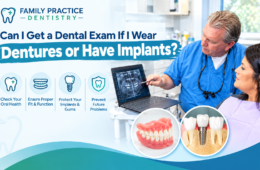
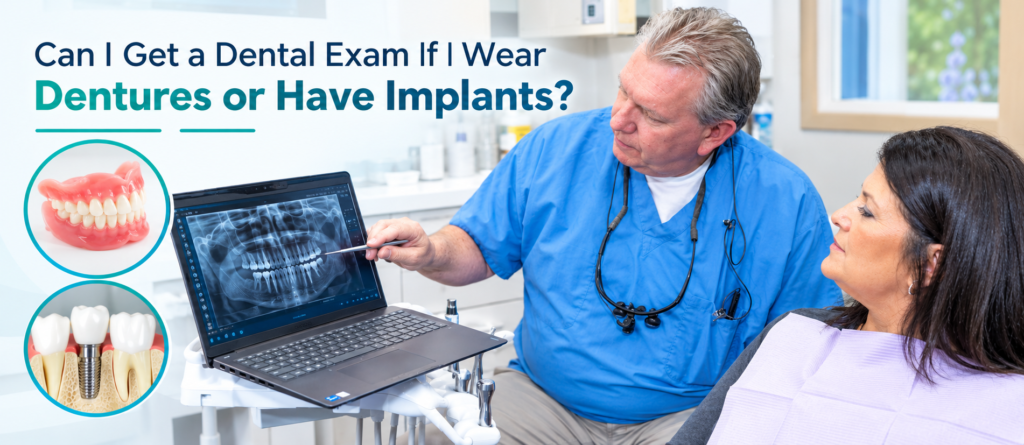
Yes, you can, and you should. Having dentures or dental implants doesn’t mean you’re done with the dentist. Your mouth still needs regular checkups, whether you have a full set of dentures, a partial, one implant, or a whole arch of them. A lot of people in Kokomo put off a dental exam because they figure there’s nothing left to check. We hear it all the time at Family Practice Dentistry. The truth is that dentures and implants are some of the things that benefit most from a routine look. Here’s what a dental exam involves when you wear them, why it matters, and how often to come in.
Why a Dental Exam Still Matters After Tooth Replacement
Replacement teeth don’t get cavities, but the rest of your mouth is still very much alive. Your gums, jawbone, tongue, cheeks, and any natural teeth you still have are all open to problems. A few things we look for during an exam:
- Gum health. Gums can swell, recede, or get infected around both dentures and implants.
- Bone changes. When teeth are missing, the jawbone slowly shrinks. That’s one reason dentures loosen over time.
- Oral cancer. We check your tongue, cheeks, roof of the mouth, and throat at every exam. Denture wearers are not exempt.
- Fit and bite. A small shift in how your teeth meet can cause sore spots, headaches, or jaw pain before you realize what’s causing them.
- Remaining natural teeth. If you wear a partial denture, the teeth it clips onto work harder and need extra attention.
What a Dental Exam Looks Like If You Wear Dentures
If you wear full or partial dentures, your exam is gentle and usually pretty quick. We’ll start by talking through how things feel. Are there sore spots? Does anything slip when you eat or talk? Then we’ll check the following:
- Your mouth, with and without your dentures. We look at the gum tissue underneath for irritation, sores, or a fungal infection like denture stomatitis (a red, inflamed look that’s easy to treat once it’s spotted).
- The dentures themselves. We check for cracks, worn teeth, and stains or buildup.
- The fit. If your dentures rock, click, or need more adhesive than they used to, we’ll talk about a reline, an adjustment, or whether it’s time for a new set.
- A soft tissue and oral cancer screening.
You don’t need to do anything special to get ready. Just come in as you normally would, and bring your dentures if you take them out at night.
What a Dental Exam Looks Like If You Have Dental Implants
Implants are anchored in your jawbone, so they feel and act a lot like natural teeth. They still need to be monitored, though. During your exam we’ll:
- Check the gums around each implant for redness, swelling, or bleeding
- Look for signs of peri-implantitis, an infection that can damage the bone holding the implant in place
- Test that the implant and its crown or bridge are stable
- Check your bite, since extra pressure on an implant can wear it down early
- Take X-rays when needed to see the bone level around the implant
Caught early, gum problems around an implant are very treatable. Left alone, they can cost you the implant. That’s the biggest reason we don’t skip exams for implant patients.
Dentures vs. Implants: What We Check at Each Exam
What we look at | Dentures | Implants |
Gums | Irritation, sores, fungal infection under the denture | Redness, swelling, or bleeding around each implant |
Jawbone | Shrinkage that causes loosening | Bone level around each implant, sometimes with X-rays |
Fit and stability | Rocking, clicking, slipping | Any looseness in the implant, crown, or bridge |
Bite | Uneven wear on the denture teeth | Extra pressure that can wear down the crown |
Natural teeth | Teeth that hold a partial in place | Neighboring teeth and how they work with the implant |
Oral cancer screening | Yes, every exam | Yes, every exam |
Common Myths About Exams With Dentures or Implants
“I don’t have real teeth, so there’s nothing to check.” Your gums, jawbone, tongue, and the lining of your mouth all still need a look, and so does the fit of whatever you’re wearing.
“If nothing hurts, everything’s fine.” Early gum infections, bone loss, and oral cancer often cause no pain at first. That’s the point of an exam.
“Implants can’t get infected.” They can’t get cavities, but the gum and bone around them can get infected, and that’s the main reason implants fail.
“I’ll just get my dentures re-fitted when they start bothering me.” Dentures that stay loose too long can rub the gums raw and speed up bone loss. A quick adjustment early is a lot easier than a rebuild later.
How Often Should You Go?
For most people with dentures or implants, a checkup every six months is a good rhythm. If you have a history of gum disease, a newer set of dentures, or recent implant work, we may ask to see you more often at first. Your dentist will tell you what makes sense for your mouth.
What Happens If You Skip Your Exams
Nothing dramatic, at first. That’s why people skip them. Over months or years, though, small things stack up. A denture that fits a little loosely turns into sore gums and trouble eating. A bit of bleeding around an implant turns into bone loss. A patch in your mouth that nobody looks at goes unnoticed. Most of these are easy to handle when they’re caught early and much harder, and more expensive, when they’re not.
If it’s been a year or more since your last exam, don’t worry about the gap. Just come in. We won’t lecture you; we’ll take a look and tell you where things stand.
Why Your Dentist Can't Replace the Daily Routine
Exams catch problems, but daily habits prevent them. A few basics:
- Dentures: take them out at night, clean them every day with a denture cleanser or soft brush (not regular toothpaste, which can scratch), and soak them in water or a cleaning solution while you sleep.
- Implants: brush and floss them like natural teeth. A water flosser or interdental brush can help reach around the base.
- Everyone: gently brush your gums, tongue, and any natural teeth you have left. Skipping this is how most denture-related infections start.
When Not to Wait for Your Next Appointment
Call us sooner if you notice:
- Dentures that slip, click, or rub.
- Sore spots, sores, or a patch that won’t heal.
- Gums that bleed, swell, or pull back around an implant.
- A loose implant or crown.
- Pain when you chew.
- A bad taste or smell that won’t go away.
Small issues are quick to fix. Waiting makes them bigger, and with implants, it can put the whole restoration at risk.
Schedule Your Dental Exam
Whether you wear full dentures, partial dentures, or have dental implants, keeping up with regular dental exams helps you protect your oral health and catch potential problems before they become more complicated. A comfortable smile starts with knowing that your replacement teeth and the tissues supporting them are getting the care they need.
At Family Practice Dentistry in Kokomo, you can discuss concerns about denture fit, implant maintenance, or changes in your mouth with your dental team. If it has been a while since your last visit, now is a good time to schedule an appointment and find out what your smile needs.