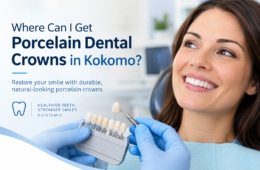
Yes, you can explore porcelain dental crown treatment at Family Practice Dentistry in Kokomo, where Dr. Kevin J. Welch, DDS, provides restorative dental care and evaluates patients’ needs to help determine suitable crown options.
A damaged, cracked, or weakened tooth can affect your ability to chew comfortably and feel confident about your smile. Porcelain dental crowns are one option for restoring a tooth’s appearance and function while protecting the remaining natural structure. Understanding how these crowns work, when they may be recommended, and what to expect from treatment can help you make an informed decision about your dental health.
What Are Porcelain Dental Crowns?
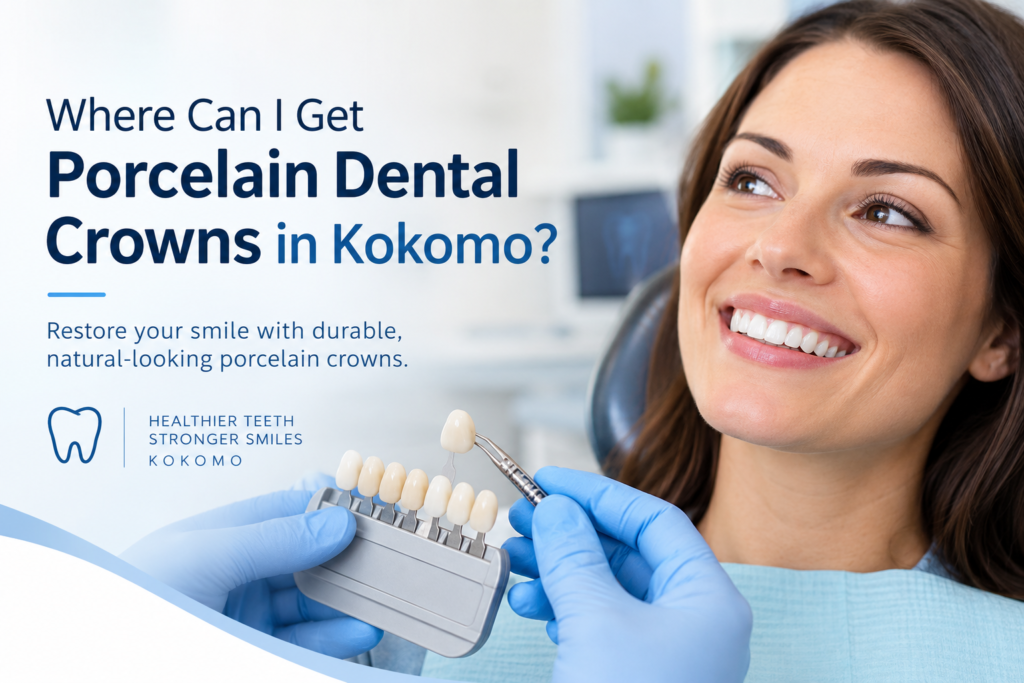
A porcelain dental crown is a custom-made restoration designed to cover the visible portion of a damaged or weakened tooth. It restores the tooth’s shape, size, and appearance while helping it withstand normal chewing forces.
Porcelain is commonly chosen because its color and translucency can closely resemble natural tooth enamel. This makes porcelain crowns a consideration for front teeth and other visible areas where appearance matters.
A dentist may recommend a porcelain crown when a tooth has extensive decay, a large fracture, significant wear, or weakened structure following certain dental procedures. The suitability of a crown depends on the amount of healthy tooth structure remaining and the condition of the underlying tooth.
When Might You Need a Porcelain Dental Crown?
Porcelain crowns can address several dental concerns, depending on the condition of the affected tooth.
1. A Cracked or Broken Tooth
A cracked or broken tooth may become sensitive or uncomfortable when you bite down. If the damage is extensive, a crown may help cover and protect the remaining tooth structure.
However, not every fracture can be treated with a crown. A dentist must determine whether the crack extends into the root or below the gumline before recommending treatment.
2. A Tooth With Extensive Decay
When a cavity affects a large portion of a tooth, a filling alone may not provide sufficient support. After removing the decay, a dentist may recommend a crown to restore the tooth’s shape and protect the weakened structure.
If decay has reached the pulp inside the tooth, root canal treatment may be needed before the crown is placed.
3. A Tooth After Root Canal Treatment
Root canal treatment can help preserve a tooth affected by infection or damage inside its pulp. However, the remaining tooth may require additional protection, particularly if substantial structure has been lost.
A dental crown may help restore strength and reduce the risk of fracture. The dentist will determine whether a crown is necessary based on the tooth’s location and condition.
4. Worn or Discolored Teeth
Teeth affected by significant wear may lose their original shape and function. In selected cases, a crown can rebuild the tooth and improve its appearance.
Crowns may also address discoloration when other cosmetic treatments are unsuitable. Because placing a crown involves reshaping the tooth, the dentist will consider more conservative alternatives when appropriate.
What Are the Benefits of Porcelain Dental Crowns?
Porcelain dental crowns offer several potential benefits for patients who need restorative treatment.
- Natural appearance: Porcelain can be matched to the shade of surrounding teeth for a more natural-looking result.
- Restored tooth shape: A crown can rebuild the contour of a damaged or worn tooth.
- Protection for weakened teeth: Covering the remaining tooth structure can help reduce the risk of additional damage.
- Improved chewing function: A properly fitted crown can help restore comfortable biting and chewing.
- Customized fit: The restoration is designed to fit the prepared tooth and work with the surrounding teeth.
The results depend on the tooth’s condition, the crown material, the quality of the restoration, and ongoing oral care. Your dentist can explain the likely benefits and limitations for your specific situation.
Porcelain Crowns vs. Other Dental Crown Materials
Porcelain is not the only material available for dental crowns. Depending on your needs, a dentist may discuss ceramic, zirconia, porcelain-fused-to-metal, or metal restorations.
Porcelain crowns: Often considered when a natural-looking appearance is a priority.
Zirconia crowns: Known for their strength and used in appropriate situations where chewing forces are a consideration.
Porcelain-fused-to-metal crowns: Combine a metal base with a tooth-colored outer surface.
Metal crowns: Can be durable but have a metallic appearance that may be less desirable for visible teeth.
The right material depends on the tooth’s position, the amount of chewing pressure it receives, your cosmetic preferences, and the amount of healthy tooth structure remaining. Your dentist can help you compare the options before deciding.
What Happens During a Porcelain Dental Crown Procedure?
Understanding the treatment process can help you feel more prepared for your appointment.
Step 1: Examination and Treatment Planning
The dentist examines the affected tooth, reviews your symptoms, and may take dental X-rays to assess the root and surrounding structures. This evaluation helps determine whether a crown is suitable or whether additional treatment is needed.
Step 2: Preparing the Tooth
The dentist reshapes the tooth to create room for the crown. Any decay is treated, and a buildup may be needed if too much tooth structure has been lost.
Local anesthesia is generally used during tooth preparation to help minimize discomfort.
Step 3: Taking an Impression or Digital Scan
An impression or digital scan records the prepared tooth’s shape. This information is used to create a crown that fits the tooth and aligns with the surrounding teeth.
A temporary crown may be placed while the permanent restoration is being made.
Step 4: Fitting the Permanent Crown
At the placement appointment, the dentist checks the crown’s fit, appearance, and bite. Adjustments may be made before the crown is secured.
Your dentist will also explain how to care for the restoration and what symptoms to watch for after treatment.
What Happens After Your Dentist Reviews Your X-Rays?
Your dentist will then analyze your photos and compare the findings with the information from your oral examination. If the images indicate a concern, your dentist will let you know what this might signify and discuss further action steps.
Depending on the findings, these steps might include:
- Surveillance of an area that is not currently being treated.
- Educating patients on possible filling options for known cavities.
- Assessing the health of the gum when bone changes occur.
- Evaluating a tooth that may have issues with its roots.
- Ordering more imaging tests if needed and referring you to a specialist if needed.
Not every finding requires immediate treatment. Your dentist will consider the overall condition of your mouth, the severity of the concern, and your individual dental needs when developing a treatment plan.
How Long Do Porcelain Dental Crowns Last?
Porcelain dental crowns can last many years, although their lifespan varies depending on the material, oral hygiene, bite pressure, and daily habits. Grinding your teeth, biting hard objects, or neglecting oral care can increase the risk of damage.
To help maintain your crown:
- Brush twice daily with fluoride toothpaste.
- Clean between your teeth every day.
- Avoid chewing ice and other very hard objects.
- Do not use your teeth to open packages.
- Attend regular dental examinations and professional cleanings.
- Ask your dentist about a night guard if you grind or clench your teeth.
A crown does not prevent decay around its edges. Keeping the underlying tooth and surrounding gums healthy remains essential.
How Do You Choose a Dentist for Porcelain Crowns in Kokomo?
Choosing a dentist involves more than comparing prices. Consider the following factors when researching porcelain dental crown treatment:
- Restorative experience: Look for a dentist who evaluates damaged teeth and explains appropriate restoration options.
- Material selection: Ask which crown materials may suit your tooth and why.
- Treatment planning: Make sure you understand the procedure, expected timeline, and any additional treatment.
- Cost transparency: Request an estimate and discuss insurance coverage before treatment begins.
- Aftercare guidance: Ask how to maintain the crown and what to do if it becomes uncomfortable or damaged.
A consultation gives you an opportunity to discuss your concerns and understand whether porcelain is the right material for your situation.
Closing Insights
Porcelain dental crowns can help restore the appearance and function of teeth affected by extensive decay, fractures, or structural weakness. Their natural-looking appearance makes them a useful option for certain restorative needs, but the best treatment depends on your individual dental condition.
If you are considering a porcelain crown in Kokomo, an evaluation with a dentist can help you understand the available materials, expected costs, and steps involved in treatment. With an appropriate restoration and consistent oral care, you can help protect your tooth and maintain your smile over time.