Some dental issues may not occur during normal working hours. Dental emergencies can occur at the most inopportune times, such as an unexpected toothache, broken tooth, dental injury or swelling. You’ll be better equipped to keep your smile intact and avoid a small problem turning into a large one by knowing the signs it’s time for a problem to be taken seriously.
There are some dental issues that may cause some discomfort and can be delayed until a normal checkup. Others require timely treatment to manage pain, prevent infection or preserve the tooth. When you’re not sure if your symptoms are serious, it’s best to consult with a dentist and let them know what’s going on.
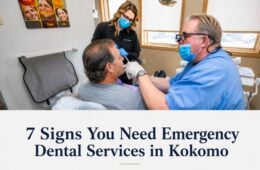
Here are 7 common signs you may need emergency dental services in Kokomo.
1. Severe or Sudden Tooth Pain
Sometimes a mild toothache isn’t really a dental emergency. If pain is intense or sudden, however, it should not be overlooked, particularly if it hinders eating, sleeping or day-to-day functioning.
If you have severe toothache, you may have any of the following conditions:
- A deep cavity
- An infection within the tooth.
- A fractured or broken tooth.
- Damage to the tooth nerve.
- A dental abscess
Self medication with pain relievers may offer temporary relief, but is not effective in addressing the underlying cause of a person’s pain. Seek professional dental attention if your toothache is either very intense or lasts for a prolonged period of time.
2. A Broken, Cracked, or Chipped Tooth
Damage to teeth can occur during eating, playing sports, falling or during an accident. While a tiny chip may not necessarily need emergency treatment, a large break or painful crack may call for urgent dental attention.
A broken tooth may reveal inner layers of the tooth that can be sensitive. This may make it painful to eat or drink something hot, cold or sweet.
In case of broken tooth:
- Gently rinse your mouth with water.
- Avoid chewing on the damaged side.
- If feasible, retain any large portion of the tooth.
- Avoid putting the tooth back in place with glue.
- See your dentist for guidance.
Early treatment can help preserve the remaining tooth structure and reduce the risk of further damage.
3. A Knocked-Out Tooth
If the entire tooth is knocked out, it is a dental emergency. An immediate response may result in a better chance of saving the tooth in some cases.
- If an adult tooth is knocked out, carefully pick it up by the crown, or the part normally visible in your mouth. Avoid touching the root, as this can damage the delicate cells on its surface.
- Gently rinse with clean water if possible. Avoid scratching or cutting away tissue which is attached to the tooth root.
- If possible, replace the tooth in their socket, but do not push the tooth in. If this cannot be done, make sure it is kept moist and go to the dentist as quickly as possible.
Knocked out teeth need to be treated quickly.
4. Swelling in Your Face, Jaw, or Gums
If the swelling is around the mouth, gums, jaw or face, it is a symptom of infection. A tooth infection could arise from an untreated dental cavity, broken down tooth, gum disease or any other dental issue.
You may also notice:
- Red or swollen gums
- Sensitivity in the area surrounding a tooth.
- The unpleasant smell in the mouth.
- Pus around the gums
- Fever
- Difficulty opening your mouth
Dental infections should not be ignored. Sometimes an infection may develop beyond its initial site and start to become severe. Seek urgent help if you experience facial swelling, extreme pain, fever or difficulty breathing or swallowing.
5. Bleeding That Does Not Stop
Some dental treatments or a blow to the mouth may cause a little bleeding. If the bleeding is heavy or persists after gentle pressure, however, it’s a sign that it needs attention. Any injury can injure the gums, lips, tongue or other mouth tissue. Continue to follow-up with your dentist or seek emergency care if bleeding persists after your dental injury.
If you have to wait for professional care, try to apply gentle pressure to the area with clean gauze or cloth. Don’t assume that the pain is not that bad that they should not seek attention for the bleeding. The volume and duration of the bleeding are important.
6. A Dental Injury After an Accident
A blow to the face can result in more than just a visible chip or broken tooth. An accident can cause a tooth to become loose, damage to the roots, injury to the gums, or injury to multiple teeth.
Dental injuries can occur during:
- Car accidents
- Sports
- Falls
- Workplace accidents
- Physical activities
- Bites or other unexpected injuries
If a tooth appears normal following an accident, it is advisable to have it evaluated if there is pain, sensitivity, looseness, swelling or change in the way that teeth fit together. Damage can occur to the tooth that might not be easily noticeable, and early evaluation can help detect the damage.
7. A Lost Filling, Crown, or Other Dental Restoration
Sometimes, dental fillings, crowns, bridges and other restorations become loose or fall out. This may leave the tooth sensitive or exposed. A lost restoration doesn’t always represent a life-threatening emergency but shouldn’t be overlooked. A tooth that is exposed may be more susceptible to damage, sensitivity or decay.
If the crown or filling gets loose:
- If possible retain the restoration.
- Avoid chewing on that side.
- Maintain cleanliness of the area.
- If foods are very hot or cold, they may cause sensitivity.
- Contact your dentist for instructions.
Your dentist will be able to decide if the restoration can be repaired, replaced or treated in another way.
When Should You Seek Emergency Dental Care?
Not every dental problem requires immediate treatment, but some symptoms should not be ignored. A good rule of thumb is that if a dental problem causes severe pain, bleeding, swelling, injury, or a sudden change in your teeth or mouth, you should contact a dentist as soon as possible.
If you experience any of the above symptoms, it is important to see a dentist sooner rather than later.
- Severe or persistent tooth or jaw pain.
- A knocked-out or dislodged tooth.
- A badly broken, cracked, or chipped tooth.
- Significant swelling in the gums, mouth, or face.
- Signs of a dental infection, such as an abscess or worsening swelling.
- Bleeding that does not stop.
- A serious injury to the teeth, gums, jaw, or mouth.
- Severe tooth sensitivity following an injury.
Seek emergency medical care if you have trouble breathing or swallowing, a very swollen face or serious injury.
What Should You Do While Waiting for Dental Care?
Don’t panic and do some preventive measures to protect the affected area to help with dental emergencies.
Depending on the problem you can:
- Rinse mouth with water.
- Apply cold compress to the outside of the face to reduce swelling.
- Don’t chew on the sore side.
- Do not discard any fragments of the broken tooth or any dental work.
- Follow your dentist’s suggestions.
- Do not put aspirin on the gums or teeth.
Home care can only be temporary. It is important to have the underlying dental problem evaluated by a professional.
Do Not Ignore a Dental Emergency
Sometimes the pain or damage in the tooth may temporarily improve, but it does not always mean the tooth is better. A cavity left untreated can become infected; a cracked tooth can get worse and an injury may cause damage that is not apparent. Early professional treatment could help minimize the discomfort and maintain your natural teeth. When you have a dental emergency and don’t know what to do, it’s best to call a dental office. Your dentist can make a judgment call on your need for immediate care.
Get the Emergency Dental Care Your Smile Needs
The stress of unexpected dental issues can be difficult particularly if you have pain or an injury. Family Practice Dentistry offers dental services to the Kokomo area and can assist with evaluating emergency dental needs.
If your tooth is so sensitive that it causes pain, or if the dentin of your tooth is damaged, if there is swelling around your tooth or if you have some other unusual dental condition that requires action, call Family Practice Dentistry and talk with us about your symptoms and what to do next.
Don’t let a dental emergency escalate. The proper treatment at the proper time can help keep your smile safe and help you to feel comfortable again.