A dentist may recommend repairing a dental filling when the damage is small and the remaining restoration is stable. If the filling is extensively worn, loose, cracked, or affected by decay around or underneath it, replacement may be necessary. The decision depends on the extent of the damage, the health of the surrounding tooth, and how well the existing filling functions. With regular use, a dental filling can wear down or become damaged over time. Knowing when to repair or replace a dental filling can help protect your tooth and maintain your oral health.
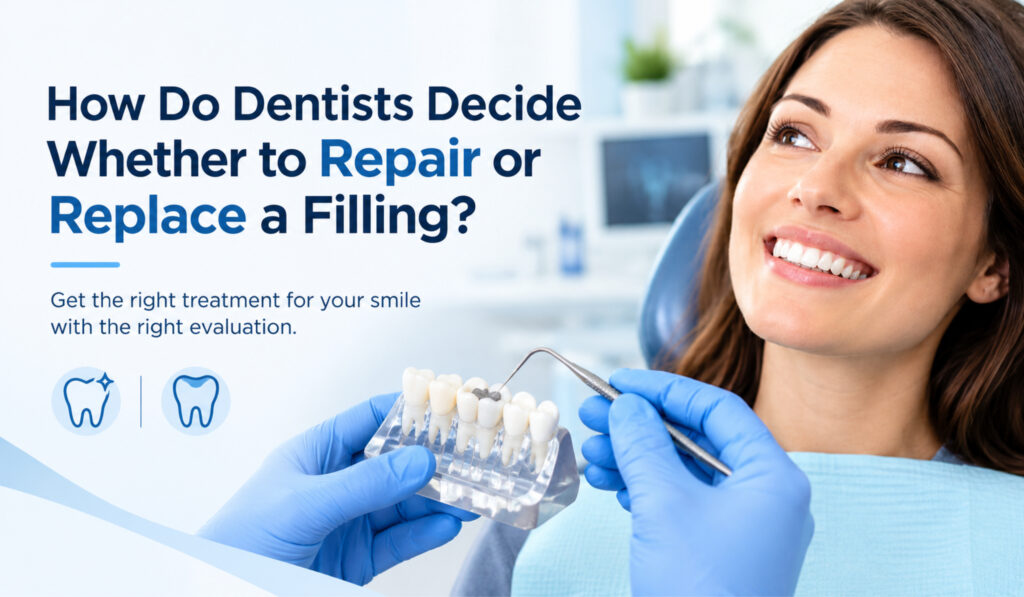
What Is the Difference Between Repairing and Replacing a Dental Filling?
Repairing a filling involves correcting a damaged area while preserving the portion of the existing restoration that remains sound. Replacing a filling involves removing the existing restoration and placing a new one.
A small chip may be repairable if the rest of the filling remains stable. However, extensive damage, a loose restoration, or decay affecting the surrounding tooth may require replacement. If the tooth has lost substantial structure, a dental crown or another restorative treatment may be more appropriate.
The goal is to address the problem while preserving as much healthy natural tooth structure as possible.
7 Factors Dentists Consider Before Repairing or Replacing a Filling
1. The Extent of Damage to the Filling and Tooth
A small chip along the edge of a filling may be repairable if the remaining material is firmly attached and the tooth is healthy. Larger fractures or damage affecting several areas may make replacement more suitable.
The location also matters. Fillings on chewing surfaces experience repeated biting forces, which can affect their durability. A dentist considers how the damage affects chewing and the stability of the restoration before recommending treatment.
2. Whether New Tooth Decay Is Present
Decay can develop around an existing filling and sometimes extend beneath it. This is known as recurrent or secondary decay.
A dentist examines the edges of the filling and the surrounding tooth for signs of damage. Dental X-rays may be recommended when necessary to assess areas that cannot be fully evaluated visually.
If decay is present beneath the restoration, repairing only the visible surface may not resolve the underlying problem. The affected tooth structure must be assessed before choosing an appropriate treatment.
3. How Securely the Filling Is Attached
If a filling becomes loose, shifts, or separates from the tooth, the dentist needs to determine why. Possible causes include wear, a fracture, or damage to the surrounding tooth.
A small defect in an otherwise stable filling may be repairable. If a substantial portion has detached or the restoration no longer protects the tooth effectively, replacement may be necessary.
Avoid trying to glue a loose filling back into place. A dental professional should evaluate the tooth to determine the safest next step.
4. How Much Healthy Tooth Structure Remains
A filling restores part of a tooth damaged by decay or injury, but it does not make the remaining tooth immune to fractures.
When a large filling is surrounded by weakened tooth structure, another filling may not provide enough support. Depending on the extent of the damage, a dentist may consider a dental crown to cover and protect more of the remaining tooth.
Not every large filling requires a crown. The recommendation depends on the size of the defect, the condition of the tooth, and whether cracks or other structural problems are present. Learn more about dental crowns.
5. Whether You Have Pain or Sensitivity
A damaged filling may cause sensitivity, discomfort when biting, or irritation when food becomes trapped around the restoration. However, these symptoms do not automatically mean the filling needs replacement.
Sensitivity can also result from a high filling, exposed dentin, a cracked tooth, or irritation of the tooth’s inner tissues. A dentist may examine the restoration, check your bite, and perform additional tests to identify the cause.
Severe or worsening tooth pain, facial swelling, or fever associated with dental pain requires prompt professional assessment.
6. The Age and Condition of the Filling
Dental fillings do not have a single expiration date. Their lifespan varies according to the material, size, location, chewing forces, oral hygiene, and other individual factors.
An older filling does not necessarily need replacement simply because it has been in place for many years. If it remains stable and the surrounding tooth is healthy, monitoring it during routine dental examinations may be appropriate.
Replacement may be recommended if the filling develops significant wear, cracks, loose edges, or decay around the restoration.
7. Whether the Tooth Needs More Extensive Treatment
Sometimes, a damaged filling reveals a problem that cannot be resolved by repairing or replacing the filling alone. Extensive decay or a significant fracture may require a different restorative approach.
If the inner tissues of the tooth are affected, additional treatment may also be needed. A dentist evaluates the entire tooth rather than focusing only on the filling material to determine the most suitable option.
When Can a Composite Filling Be Repaired?
Composite fillings are tooth-colored restorations commonly used to repair cavities and certain minor tooth defects.
A dentist may consider repairing a composite filling when the damage is limited, the remaining material is stable, and the surrounding tooth structure is healthy. The damaged area must also be suitable for a reliable bond with the repair material.
Repairing a filling may preserve healthy tooth structure and avoid removing an otherwise serviceable portion of the restoration. However, extensive damage or decay may make replacement necessary.
Read more about composite fillings to learn how tooth-colored restorations are used to repair damaged teeth.
What Happens During a Dental Filling Evaluation?
When a filling feels uncomfortable, appears chipped, or becomes loose, a dentist may take several steps to assess it.
- Review your symptoms: Discuss when the problem began and whether you experience sensitivity or pain when chewing.
- Examine the filling: Check for chips, cracks, loose edges, and signs of decay.
- Check your bite: Evaluate how your teeth meet if the filling feels too high or hurts during chewing.
- Use X-rays when appropriate: Assess areas that may not be fully visible during a clinical examination.
- Discuss treatment options: Determine whether monitoring, repair, replacement, or another restorative treatment is appropriate.
This evaluation helps identify the cause of the problem rather than replacing a filling simply because it is old.
How Can You Help an Existing Dental Filling Last Longer?
Although no filling lasts forever, everyday habits can help protect the restoration and the surrounding tooth.
- Brush twice daily with fluoride toothpaste and clean between your teeth every day.
- Limit frequent sugary snacks and drinks to reduce the risk of tooth decay.
- Avoid chewing ice, hard objects, or non-food items that could damage fillings.
- Ask a dentist about a suitable mouthguard if you grind your teeth.
- Attend regular dental examinations to monitor existing restorations.
- Have new sensitivity, discomfort, or a loose filling assessed rather than ignoring the problem.
A filling may need attention even when it does not cause pain. Regular dental examinations can help identify changes before they develop into more extensive problems.
Why Regular Dental Checkups Matter for Existing Fillings
Dental fillings can wear down or become damaged over time, even when they initially restore a tooth successfully. Routine examinations help identify changes in an existing filling, early signs of decay, and damage to the surrounding tooth structure.
If a problem is identified early, a smaller repair may be possible in some cases. More extensive damage may require a replacement filling or another restorative treatment.
Pay attention to changes such as sensitivity when eating or drinking, discomfort when chewing, rough edges, or food repeatedly becoming trapped around a filling. These signs do not always mean the filling has failed, but they should not be ignored.
Maintaining good oral hygiene and addressing changes promptly can help protect natural teeth and existing restorations.
Closing Insights
Deciding whether to repair or replace a dental filling depends on the extent of the damage, the presence of decay, the stability of the restoration, and the amount of healthy tooth structure remaining.
A small defect may be suitable for repair, while a filling with extensive damage may need replacement. In some cases, a dental crown or another restorative option may be more appropriate.
Dental resources, such as those provided by Family Practice Dentistry, can help patients better understand restorative dental procedures and the factors dentists consider when evaluating existing fillings. Learning about these options and attending regular dental examinations can help you maintain existing dental work and make informed decisions about your oral health.