A damaged tooth does not necessarily mean a lost tooth. Based on the nature and amount of damage, a dentist can restore the tooth and make it last many more years. In some cases, however, a tooth may have been too damaged, weak, or infected to be predictable. In the latter, removing the tooth might be the appropriate treatment.
Damage may result from a lot of decay, an accident, a crack, infection, tooth decay throughout the child’s life, or from long-term wear. In other cases, it may be more obvious, like if a significant amount of the tooth breaks. However, in some instances, the issue may occur slowly and yet be unnoticed. A dentist would typically recommend tooth removal after examining the tooth, evaluating the surrounding tissues, and reviewing dental X-rays. The goal is not simply to remove the damaged tooth, but to determine the most suitable long-term solution for your oral health.
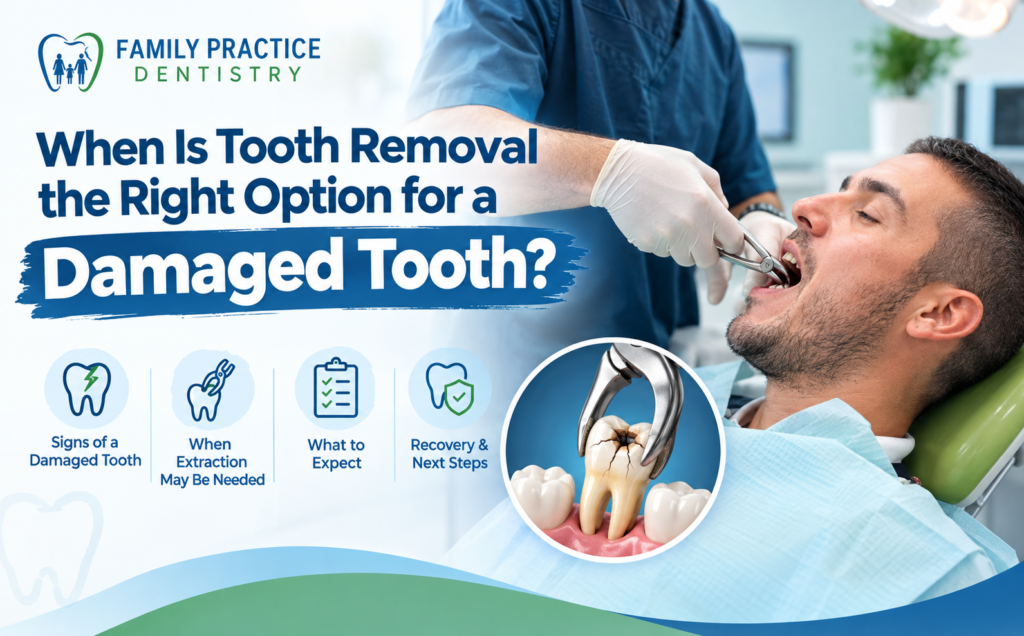
Can a Damaged Tooth Be Saved?
Yes in many cases. Before deciding to remove a damaged tooth, dentists will first decide if it can be fixed. Depending on the issue, this could be a filling, dental crown, root canal treatment, and so on. When there is sufficient healthy structure present to support a restoration, there is a good chance to save a tooth.
Several factors are considered, including:
- How much of the tooth has been damaged
- Whether the damage is below the gum line
- The condition of the root of the tooth.
- Determine whether an infection is present or not
- The thickness of the supporting bone
- The condition of the surrounding gums
- The ability to restore a tooth successfully
- Whether or not the tooth will be able to continue functioning properly
If the remaining tooth structure is too weak or the damage has affected areas that cannot be predictably repaired, removal may be considered.
When Is Tooth Removal the Right Option?
Not all damaged teeth must be extracted. But under some circumstances, it’s more suitable to remove the tooth rather than try to save it.
1. The Tooth Is Severely Broken
Tooth fractures can occur due to an accident, biting onto something hard, decay not treated, or wearing over time. While a small chip can be made easily, a serious fracture can result in little reminder of a healthy tooth to support a restoration. If a significant part of the tooth has been broken off, for instance, and the remaining structure is not strong enough to hold a crown or filling, your dentist may suggest extracting the tooth. The location and depth of the fracture are also important. It can be more difficult to treat when the crack goes into the root.
2. Extensive Tooth Decay Has Destroyed the Tooth
Tooth decay gradually weakens the structure of a tooth. When detected early, decay can often be treated with a restoration. But serious decay can compromise enough of the tooth to make it impossible to restore it. Under such conditions, your dentist will decide if it is possible to save the tooth, or if extraction is the better option. This is one of the reasons why it is important to have routine dental visits even if you don’t have any pain. If the damage continues to worsen, a damaged or decayed tooth can become much more difficult to treat.
3. The Tooth Has a Serious Infection
If a tooth is so badly damaged, an infection may form within the tooth. Depending on the state of the tooth, root canal treatment might be an alternative to remove the infection, while leaving the natural tooth. But not all teeth are suitable for root canal therapy. Removal of the tooth may also be recommended if there is extensive structural damage and it is not possible to restore the tooth after the infection has been treated. Your dentist can assess the condition of the tooth and let you know if it’s possible to save the tooth.
4. The Tooth Has a Vertical Root Fracture
Certain cracks are in the crown of the tooth and may be able to be treated. Some grow upwards from the root. A vertical root fracture may affect the ability of the tooth to function normally and make normal restoration difficult or impossible.These fractures are often hard to diagnose by their symptoms alone, so your dentist may examine your tooth to assess it using dental imaging and clinical examination.
5. There Is Not Enough Healthy Tooth Structure
Restoring a damaged tooth requires enough healthy structure to support the restoration.If much of the crown has been lost due to decay, trauma or previous restoration, there may be insufficient remaining structure for a filling or a crown to be securely placed. In these cases, the repeated repair may not be a predictable long-term solution. Alternatively, extraction of the tooth might be considered, with a plan in place to replace the missing tooth where appropriate.
6. The Tooth Has Become Extremely Loose
Adult teeth should generally not move within the jaw. Sometimes, a significant amount of looseness can be related to advanced gum disease, loss of support bone, trauma to the tooth or other dental issues. The ability to treat a loose tooth depends on the cause of the loose tooth and the amount of support remaining. If there is significant loss of support and stabilization is not possible then removal may be considered.
7. A Damaged Tooth Is Creating Problems for Surrounding Teeth
A badly damaged tooth may be able to impact the surrounding areas. If there is infection, inflammation or extensive decay, there can be other problems for other teeth and tissues.If you need to have a tooth removed because it is impossible to predictably restore, your dentist may be able to treat the problem at the time and plan for the appropriate replacement or follow up treatment.
How Does a Dentist Determine Whether a Tooth Can Be Saved?
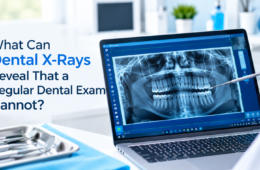
The choice isn’t made based solely on the appearance of the tooth. Your dentist will visually inspect, test how your tooth reacts to various stimuli, examine your gums and take dental X-rays or other images as are appropriate.
The examination may contribute to the answers to the following questions:
The extent of the damage:
A small crack and a tooth fractured through the root are very different situations.
The condition of the root:
The roots should give the tooth adequate support so that it is functional.
The amount of healthy structure remaining:
There must be enough tooth structure present to maintain stability of the restoration.
The condition of the surrounding bone and gums:
The supporting tissues are very significant for the long term stability of a tooth.
The presence of infection:
Treatment options may vary depending on an infection.
The tooth’s overall function:
Your dentist may also take into account the way the tooth works with your bite and with chewing.
Once your dentist has considered all of these factors, he or she can tell you what is best for your restoration or removal.
What Are the Alternatives to Removing a Damaged Tooth?
Not all teeth need to be extracted. Your dentist may talk about a variety of options to save the tooth, depending on the condition of the tooth.
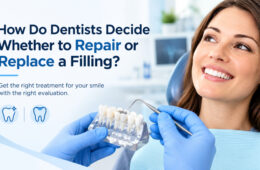
Dental Filling
A filling might be the best option if the damage or decay is minimal and enough healthy tooth structure is left.
Dental Crown
With enough structure left to support it, a crown can cover and protect a weak tooth.
Root Canal Treatment
Sometimes, the natural tooth is preserved in the event of an inner infection or extreme inflammation of a tooth.
Other Restorative Treatment
Your dentist may suggest a different restorative method as per the location and damage type. Treatment is dependent on the tooth and not just the pain and damage.
What Happens During Tooth Removal?
The method will vary based on the tooth’s condition and placement. The dentist will first numb the area with local anaesthetic for a relatively simple removal. The tooth is gently removed and extracted. For some teeth, a more complicated process is necessary. This can occur when the tooth is severely broken down, hard to reach, impacted or rooted in such a way as to be harder to pull without complications. Your dentist will outline your treatment and discuss what to expect as well as how to care for the area after treatment.
What Should You Expect After Tooth Removal?
There may be some discomfort, swelling or tenderness after the tooth is extracted. This will have to depend on the tooth involved, the type of procedure, and on your own healing process.
Your dentist will give you detailed aftercare instructions. These may include guidance about:
- Protecting the extraction site.
- What to eat and drink after the procedure.
- Cleaning your mouth.
- Avoiding activities that could disturb the healing area.
- Normal post treatment discomfort is managed.
- Identifying complications that need additional dental care .
It is important to follow your dentist’s instructions for healing.
Why Is Aftercare Important?
During the healing process, a blood clot will develop in the area of the tooth extraction. It is crucial to safeguard the site in the early healing period. Your dentist may provide you with certain guidelines to follow regarding brushing, rinsing, foods, exercise, and other activities. After the procedure, if you notice something is different or worse than usual, call your dental office for advice instead of trying to take care of it at home.
What Happens If You Leave a Severely Damaged Tooth Untreated?
Sometimes, even if there is damage to a tooth, and it is not painful, it is easy to forget about it. But, when you don’t feel pain, the tooth is not necessarily healthy. A broken tooth can continue to decay. Decay can progress, cracks can become larger, and an infection can develop or worsen. If a tooth is extensively damaged, it can be difficult to treat it later. It is not always necessary to have a damaged tooth removed. Rather, examination will help to identify what is going on and if treatment is needed.
Does a Damaged Tooth Always Cause Pain?
No. Some broken teeth will result in pain while others will not cause any symptoms. You might not notice that there is decay or structural damage in the teeth.
Some signs of warning may include:
- Persistent toothache
- Sensitivity to hot or cold
- Pain when biting
- Pain when chewing
- A visible crack
- A chipped or broken tooth
- Swelling around the tooth
- Red or swollen gums
- A loose adult tooth
- An unpleasant taste around the affected area
- A tooth that has changed color
If you experience any of these symptoms, having the tooth evaluated can help you find out what’s causing it.
What If a Tooth Breaks Suddenly?
If you experience any of these symptoms, having the tooth evaluated can help you find out what’s causing it. Sometimes a tooth can break or crack when eating food or after an accident. If a piece of your tooth breaks off, try to save the fragment if possible and contact your dentist. Try not to chew on the damaged side until the tooth has been examined. Early dental evaluation is particularly critical if the tooth is causing significant pain, swelling or other worrisome symptoms. Depending on the extent of the tooth breakage, and whether the root or inner part of the tooth is involved, the treatment will vary.
What Happens After a Tooth Is Removed?
Tooth removal may be the right treatment for a severely damaged tooth, but it does not necessarily complete the treatment plan. Depending on your needs and the location of the missing tooth, your dentist may discuss options for replacing it.
Some possible alternatives include the following:
Dental Implant
A dental implant can be used to replace the root of a missing tooth and provide support for a tooth replacement that will replace the visible part of the tooth.
Dental Bridge
A bridge can replace a missing tooth by using neighboring teeth or other supporting structures, depending on the treatment plan.
Partial Denture
Depending on the particular circumstances, a partial denture may be an option for replacing one or more missing teeth. Not all missing teeth must be replaced exactly the same. Your dentist can discuss your options, depending on your oral condition, where the tooth is, and your long-term needs.
Is It Better to Save a Natural Tooth or Remove It?
If there is a reasonable chance for the natural tooth to be successfully restored, preservation may be possible. But, when a tooth is too badly damaged, it will not give a satisfactory long-term outcome. The question is not only can a tooth be treated, but can it be successfully treated. Your dentist also takes into account if the predicted outcome will give you useful function and stability. By examining the tooth in detail, you will be able to appreciate both the condition of the tooth and the treatment choices available before deciding on treatment.
When Should You See a Dentist About a Damaged Tooth?
It is a good idea to schedule an evaluation if you have:
- A broken or cracked tooth
- Severe tooth decay
- Persistent tooth sensitivity
- Pain while chewing
- Swelling around a tooth
- A loose adult tooth
- A tooth that has become darker
- A dental injury
- A recurring problem with the same tooth
A checkup for the tooth doesn’t necessarily mean it will need an extraction. It just helps the dentist figure out what is the issue and if the tooth could be saved.
How Can You Reduce the Risk of Tooth Damage?
Not all dental injuries can be prevented, but there are some common practices you can do that can help keep your teeth safe.
Maintain Regular Dental Visits
Regular check-ups can detect decay, cracks, worn restorations and other issues before they get worse.
Practice Good Oral Hygiene
Regularly cleaning between your teeth and brushing twice a day can help minimize the buildup which can lead to tooth decay and gum issues.
Avoid Using Your Teeth as Tools
The risk of chips and fracture is higher if using the teeth to open packages, cut items or hold hard items.
Be Careful With Very Hard Foods
Weak teeth can be damaged by hard foods and objects. If you already have a broken or vulnerable tooth, talk to your dentist about what foods you should stay clear of.
Protect Your Teeth During Sports
Wearing a properly fitted mouthguard can lessen the risk of dental injuries during activities where the face is likely to come into contact with an object.
Tooth Removal Is Not Always the First Step
A damaged tooth should be assessed before determining the treatment options. Sometimes, the natural tooth may be able to be saved with restorative treatment. In some cases, the damage may be too severe to predictably repair and removal may be a suitable component of treatment. Ultimately, the best treatment will depend on the specific tooth, the condition of the neighbouring tissues, your general oral health and the treatments available. Examination can help you know what is going on if you are having pain, sensitivity, crack, broken tooth or a significant amount of decay, before the problem worsens.
Get the Right Tooth Care
If you have a damaged tooth and aren’t sure whether or not it can be saved, Family Practice Dentistry in Kokomo, Indiana can examine the tooth and discuss the available treatment options. A dental exam should be performed instead of assuming removal is required to decide the severity of damage and if restorative treatment is possible. If it is suggested to have it removed, your dentist can also discuss with you what to expect during the removal and if it should be replaced.
Call Family Practice Dentistry to arrange an appointment to get a damaged tooth checked out.